
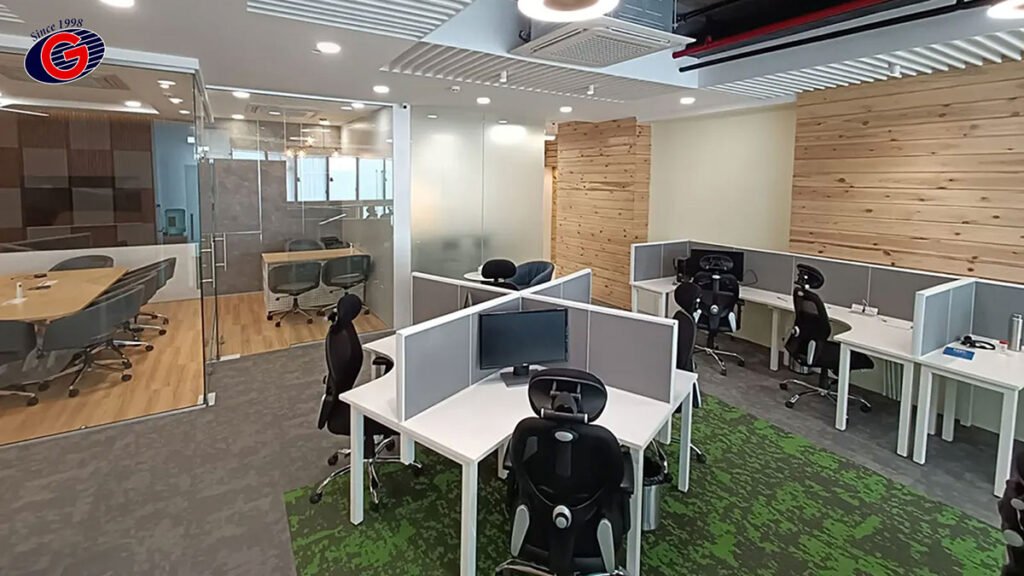
In today’s competitive business environment, an office is no longer just a physical workplace. It is a reflection of a company’s culture, professionalism, and long-term vision. A well-designed office interior directly impacts employee productivity, client perception, and overall business efficiency.
Modern businesses are increasingly recognizing that office interior design is not a luxury—it is a strategic investment.
The Role of Office Interior Design in Modern Businesses
An office environment influences how people think, work, and interact. Poorly planned offices often lead to discomfort, distractions, and inefficiency. On the other hand, thoughtfully designed workspaces create clarity, focus, and positive energy.
Key elements such as layout planning, lighting, furniture selection, acoustics, and material choices play a crucial role in shaping daily work experiences. When these elements are aligned correctly, employees feel more comfortable, motivated, and engaged.
A well-designed office also creates a strong first impression. Clients, partners, and visitors instantly form opinions based on the space they walk into. A professional, organized, and aesthetically balanced office builds trust and confidence in your brand.
Space Planning: The Foundation of a Good Office Interior
Effective office design always begins with smart space planning. Every office—large or small—has unique requirements based on the nature of work, team size, and workflow.
Proper zoning of workstations, cabins, meeting rooms, collaboration areas, and reception spaces ensures smooth movement and better functionality. Overcrowded layouts reduce efficiency, while underutilized spaces lead to wastage.
At Gruhashobha Interiors, space planning is approached with a clear understanding of business operations. The goal is to create layouts that support daily activities while allowing flexibility for future growth.
Ergonomics and Employee Comfort
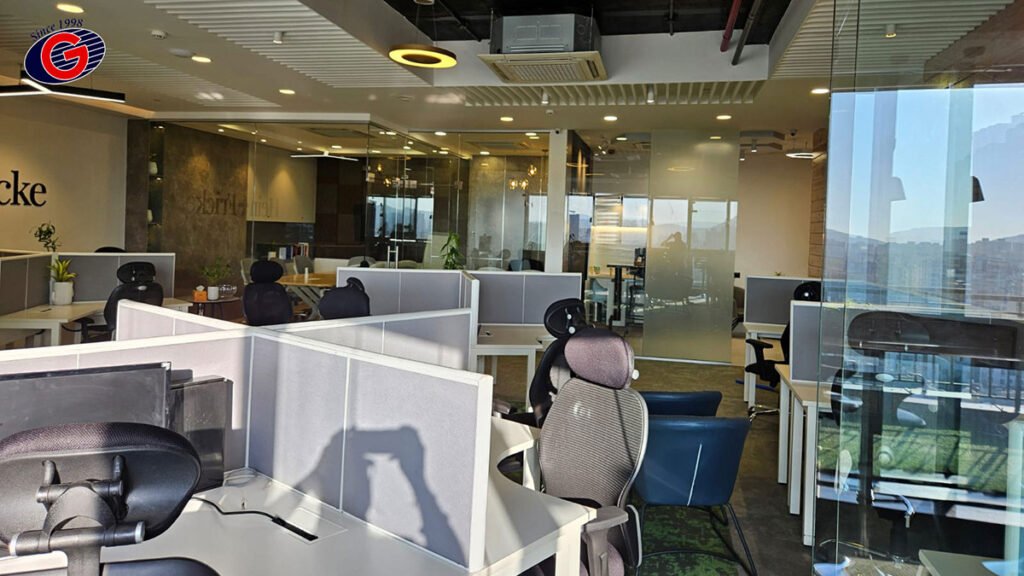
Employee comfort is one of the most critical aspects of office interior design. Long working hours demand furniture and layouts that support proper posture and reduce physical strain.
Ergonomic chairs, well-designed workstations, appropriate desk heights, and correct screen positioning contribute to better health and productivity. Comfortable employees are not only more efficient but also more satisfied with their workplace.
Designing with ergonomics in mind helps reduce fatigue, health issues, and absenteeism—making it a smart long-term decision for any organization.
Lighting and Its Impact on Productivity
Lighting is often underestimated, yet it has a powerful impact on work performance and mood. A well-lit office feels energetic, open, and professional.
Natural light is always preferred wherever possible, as it improves focus and reduces stress. Artificial lighting should be balanced—avoiding harsh glare or dim environments. Task lighting for workstations and ambient lighting for common areas create a comfortable visual environment.
Thoughtful lighting design enhances both functionality and aesthetics, making the workspace pleasant throughout the day.
Designing Small Offices with Smart Solutions
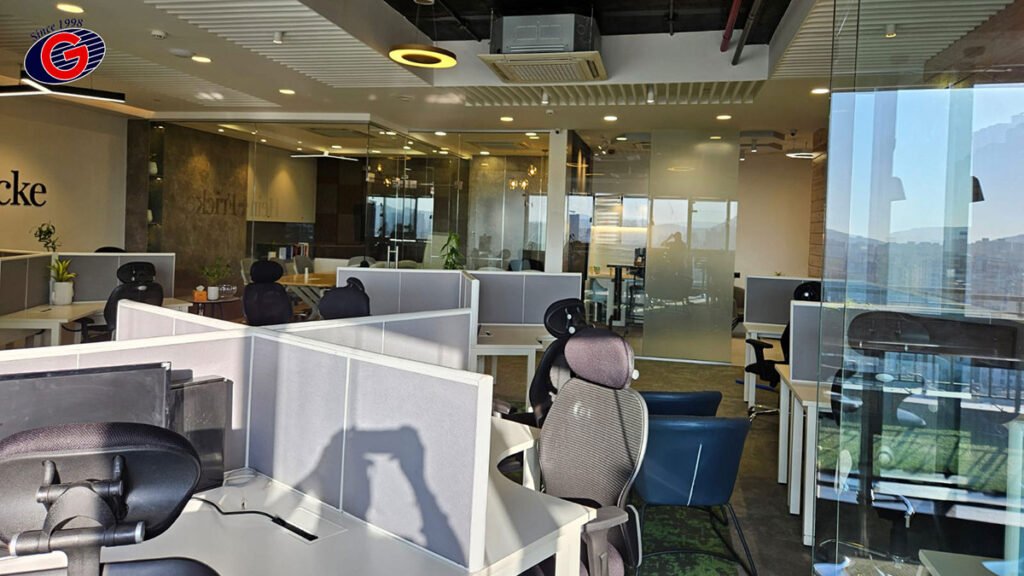
Not all businesses operate from large office spaces. Startups, consultants, and small teams often work from compact offices. However, limited space does not mean limited design potential.
With smart planning, modular furniture, efficient storage, and light color palettes, small offices can appear spacious, organized, and professional. Clean lines, clutter-free layouts, and multipurpose areas help maximize usability without compromising comfort.
Good design ensures that even small offices feel confident and capable—just like the businesses operating within them.
Office Interiors and Brand Identity
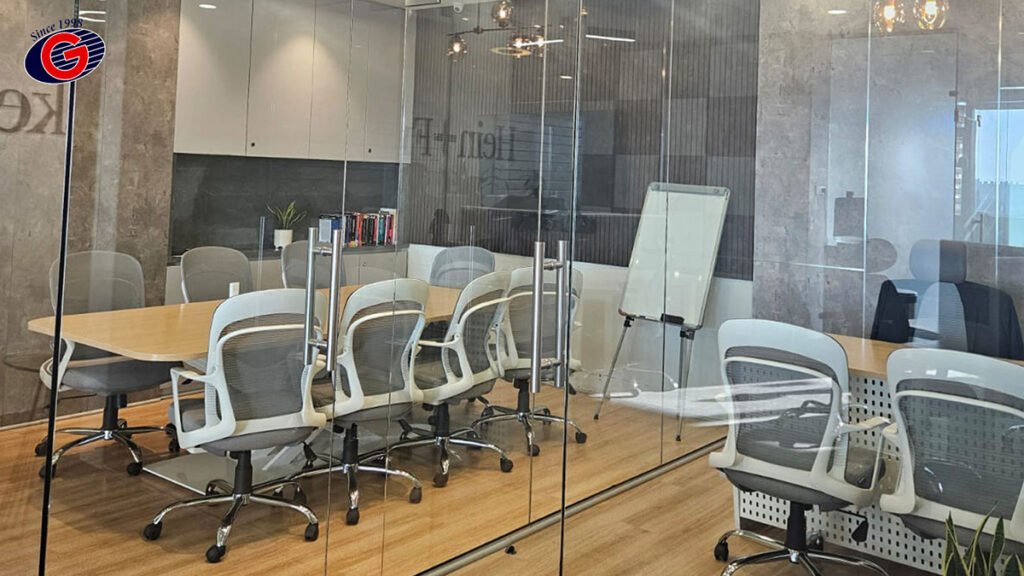
An office interior is a silent brand ambassador. Colors, materials, finishes, and overall design language should align with the company’s values and identity.
A corporate office may require a formal, minimal look, while a creative workspace may benefit from flexible layouts and vibrant elements. The key is balance—creating an environment that reflects the brand while remaining practical and timeless.
When design aligns with brand identity, the office becomes an extension of the company’s vision.
Why Professional Office Interior Design Matters
Professional office interior design goes beyond visual appeal. It ensures durability, functionality, and long-term value. Poor planning often results in repeated modifications, higher maintenance costs, and operational disruptions.
A professionally designed office reduces these issues by anticipating future needs and using the right materials and construction practices from the start.
At Gruhashobha Interiors, office interiors are designed with a focus on efficiency, comfort, and longevity—ensuring that the workspace continues to support the business for years to come.
Conclusion
Office interior design plays a vital role in shaping how businesses operate and grow. A thoughtfully designed workspace improves productivity, enhances employee well-being, and strengthens brand perception.
Whether it’s a corporate office, a startup workspace, or a compact business setup, the right interior design creates an environment where people can perform at their best.